
book review

The fifth book in the exciting Star Rider, space opera series, Call of the Eagle, has just be published and is now available on Amazon as a print book.
Here is the first chapter:
1 White Sand Desert
Baymond awoke to the rustling sound of his father entering the tent.
“Time to get up,” Michio said. “The tribe’s breaking camp.”
Baymond sat up, fear hammering through him. Samrat soldiers would be searching for him and his parents and their only chance of survival was hiding among the Bajava tribal people. He rubbed his forehead, feeling thickheaded with fatigue after only four hours of sleep, but he knew it would pass once he got moving.
His mother yawned and looked at her watch. “Why are they breaking camp so early?”
Michio began rolling up his sleeping blanket. “They travel in the cooler part of the day and rest when the sun reaches its zenith. Baymond, we need to report for guard duty. Touch up your face paint before joining the other men.” Michio already resembled a Bajava warrior. He’d grown a beard, blue streaks shone in his dark hair, and a pattern of lines and dots were freshly painted on his forehead. He was dressed in the tribe’s traditional male clothing: a wide-sleeved shirt and light-colored pants.
Toemeka pulled a kaftan over her knit top and the close-fitting pants she’d slept in, then stuffed her blanket into her saddlebag. Her movements were quick, efficient and nervous. “I’ll keep guard with you.”
“Sorry, that’s not an option,” Michio said, opening the tent flap. “All the guards are men. We can’t do anything to cause suspicion. Only Einherjar and his wife Qara Boke know we’re from another planet. The rest of the tribe thinks I’m Einherjar’s brother from another tribe.” He left the tent.
“How long have you been traveling with the tribe?” Baymond asked his mother.
“We met Einherjar a few days ago through the Resistance. This will be our first day traveling with them. We have limited knowledge of their rules and traditions.” She pulled out several small jars and opened them.
Baymond dipped three fingers into the jar with cobalt blue dye and ran them through his black hair to add streaks. His normally short hair had grown long during the nearly six months he’d been in hiding. After adding the blue streaks to his hair and beard, he rubbed brown cream on his neck and the upper half of his face to darken it. “You and Dad both have deep tans. How long have you been on planet Saroka?”
“More than four months. We left home and made the long voyage to Saroka soon after Jake notified us that your G-4 Tornado fighter was hit by anti-aircraft shells and you were missing in action.” She started applying a pattern of red and white dots and lines on his forehead. It was strange to feel her tender touch and unconditional love as if he were still a child. He hadn’t seen her in almost two years. At sixteen, he’d lied about his age and joined the Coalition of Free Nations to become a fighter pilot.
She sat back and studied her work. “You won’t need brown face paint for long. You’ve always tanned easily. Why are you so pale?”
He rubbed brown paint on his hands. “I had to stay indoors so no one would discover where I was hiding.”
“Where were you hiding?”
“A young woman saw me parachute out of my fighter and her family hid me from Samrat Condor’s soldiers over the winter.”
Toemeka hugged him tightly. “I was afraid you were dead. There wasn’t any trace of your whereabouts until you were arrested and imprisoned.”
He felt her tremble as he hugged her back. “I’m all right now, Mom.”
“You must have been terrified, knowing you were about to be executed.”
“They thought I was a spy—I was out of uniform.”
“Being a prisoner of war wouldn’t have been a much better fate.”
“I spent the last four days in prison with a man named Norgrin.” Baymond pulled a small carved eagle out of his pocket and handed it to her. “He carved this for me using nothing but a small stone shard.”
His mother examined it. “It’s a beautiful carving.”
“Norgrin saw an eagle in his dream right before I was put in his cell. When he met me, he knew I was the eagle, the enlightened soul.”
“Interesting that he recognized you as the eagle from his dream.” She handed it back.
“He was a holy man and saw a vision.”
“I’m glad you had him as your cell mate. You’d better go join your father. I need to take down the tent.”
The tent was a primitive, handmade structure of cloth over wood poles. Nothing like the lightweight pop-up tents Baymond was used to. “Do you want some help?”
“No, the tribe considers it women’s work. You’d better go get your orders for the day.”
Baymond took a piece of meat jerky out of his saddlebag and began chewing it as he left the tent. It tasted gritty and probably had sand on it, but he was too hungry to throw it away. Outside, the sun was rising and the camp was already bursting with activity. The women were taking down the tents and packing the supplies. The children were carrying blankets over to the khevons. The sandy-colored beasts had large ears and a brown stripe down the center of their backs.
He looked in the other direction toward the desert. White sand stretched as far as he could see, with rolling dunes in the distance. It was devoid of life and eerily silent, contrasting with his memory of the woods near where he’d grown up that teemed with life.
Baymond’s gaze returned to camp. The guards were gathered around Einherjar, the tribal chief. He hurried over to them.
***
After taking down the tent, Toemeka tied it and their saddlebags onto the khevons. Michio and Baymond came over and thanked her, then mounted and rode off to patrol with the other men.
Once the caravan was ready to move on, Toemeka walked alongside Qara Boke. The elders and young rode in the wagons. The older children were in charge of the flock of neeree and of collecting the furry animal’s dung in baskets to use for fires. The neeree were funny-looking creatures with bushy tails that curled over their bodies and shaded their heads.
As she trudged along, Toemeka was glad she didn’t have a baby or toddler tied to her back like many of the women. She was still getting used to the heat and wasn’t looking forward to a day of walking across the sand in the sun. She adjusted her cloth head-covering so it covered her nose and mouth to keep from breathing in fine particles of sand.
After a while, an attractive young tribal woman joined them, introducing herself as Chrisshawna. Toemeka knew enough of the Deutzian language to hold a simple conversation. Chrisshawna was curious about Baymond and asked several questions about him, including if he had a wife.
When Chrisshawna wandered away to talk to some women her own age, Qara Boke stared thoughtfully after her. “Your son is handsome and strong, and Chrisshawna thinks he’s Einherjar’s nephew. You’ll have to warn him to stay away from her to avoid trouble. Bajava fathers are ferociously protective of their daughters, and young men don’t speak privately to girls of marriageable age without their father’s permission.”
Toemeka frowned uneasily “Thank you for warning me. Baymond’s used to men and women interacting freely. He’d think nothing of talking to one of the girls.” The last thing she wanted was trouble when Einherjar and Qara Boke had done so much for them. “Thank you for helping us.”
“It’s only right when your son came here to fight our common enemy.”
The morning grew hotter and hotter, and the tribe’s pace slowed. Sweat dripped down Toemeka’s forehead, and she felt it gather on her chest and back. “How much longer until we rest?” She stopped to take a drink from her water flask.
“We’ll stop soon. Your face is flushed. Walking is hard for people not used to the desert.”
The heat grew worse, and Toemeka felt like she was in an oven being roasted alive. She didn’t think she could go much further without rest.
Fortunately, Einherjar rode by on his khevon yelling, “We’ll break here.”
Toemeka helped set out the food and cut cheese made from the milk of the comical-looking neeree. After her morning trek, their bushy tails seemed to be sensible protection from the fierce sun. She placed the cheese on pottery plates, along with flatbread and dried fruit. While the meal was prepared, the men gathered in council, except for a few guards who rode the perimeter of the camp and scouted the desert.
When the council broke up, she brought plates over to Michio and Baymond.
Michio studied her. “You look exhausted.”
“Walking in this desert heat is draining. I’d prefer riding a sand tiger.”
Baymond finished chewing his cheese. “Maybe you could ride in one of the wagons.”
She rolled her eyes. “I’m not that old.”
He felt his face heat up. “I didn’t mean to imply you were, but you were up most of the night searching the desert for Dad.”
“I’ll lie down after I eat.”
Baymond yawned. “So will I. Can you stay and eat with us?”
“That’s not the custom here.” Toemeka returned to where Qara Boke was visiting with the other women. After washing down a piece of cheese with some water, she glanced around for a place to sleep and spotted a rock outcrop a short distance from camp that would provide some shade. Once she’d hiked to it, she lay down on the shady side.
Toemeka was just about to sleep when Michio yelled, “Toemeka, look out!” Instantly alert, she sat up. An enormous reptile was racing toward her. Terrified, she glanced around for something to defend herself with. Spotting a rock, she grabbed it and sprang to her feet. The lizard-like creature looked to be nine feet long and was approaching fast. She shouted at it and hurled the rock at its head. It bounced off its scales. The creature stood still, its round eyes watching her as it raised and lowered itself on its two front legs. Then it leapt at her.
A sharp crack reverberated in the air. The beast twisted in the air and fell to the ground. Still alive, it spun around and started toward Michio who had almost reached it. He fired his rifle at the creature’s head two more times. It thrashed back and forth on the sand for a few minutes, then lay still.
Toemeka pressed her hand against her breast, feeling her heart race. She stared at the reptile in horror, realizing how close she’d come to being torn to shreds. Rifle in hand, Michio hurried over to her and drew her into his arms.
Einherjar rode up on his khevon. “Did the zellar monster bite either of you?”
Michio glanced at her, and she shook her head. “No, we’re both all right,” he said.
“I should have warned you to stay in camp, Toemeka,” Einherjar said. “Zellar monsters are rare, but their bite is deadly. Its venom paralyzes its prey to make eating it easy.”
Baymond arrived a moment later. “You all right, Mother?”
“Yes, just shaken.” She stared at the zellar monster. It was unusual looking with a gray and white striped body and a long, thick blue tail.
“That thing must weigh eight-hundred pounds,” Baymond said, studying it.
Michio gave it a poke with his foot. “It probably weighs more than that.”
Qara, Chrisshawna and some other women hurried over.
Chrisshawna gaped at the creature. “That’s a big one.”
“The desert gods are merciful!” Qara Boke said. “Few survive an attack by a zellar monster. It’s fortunate your husband was watching out for you, Toemeka.”
“I’m very lucky.” Toemeka felt Michio’s arm tighten around her.
Chrisshawna pulled her knife out of its sheath at her waist. “The meat from a zellar monster is delicious. Baymond, can you and your dad help flip it onto its back so we can slice through its soft belly? The scales on its back are too hard to cut through.”
Einherjar dismounted and, with the aid of his khevon and a rope, the three men managed to flip the creature onto its back. Qara Boke sliced down the middle of its stomach then she and Chrisshawna started cutting it up. The other women wrapped the chunks of meat in pieces of leather.
Chrisshawna smiled at Baymond. “We’ll have a feast tonight.”
Baymond grinned back. “Sounds great. I can’t remember the last time I had a feast. Can I help cut up the meat?”
She laughed. “That’s women’s work.”
Toemeka uneasily watched the friendly exchange. “Baymond, will you walk back to camp with us?”
He looked away from the butchering of the zellar monster. “Sure, what’s up?” He headed back to camp with his parents. Once they were out of earshot of the others, Toemeka related the warning Qara Boke had given about talking to young women of marriageable age.
“What a stupid custom,” Baymond said.
Toemeka narrowed her eyes. “Stupid or not, you’ll follow it, okay?”
“Yeah sure. I don’t want to be forced to marry Chrisshawna no matter how beautiful she is.” He looked back at the girl under discussion.
His parents exchanged a concerned glance.
Once all the meat was packed up, the camp moved on. Baymond rode alongside his father, guarding the perimeter of the camp. He was more diligent now that he knew to look out for zellar monsters as well as enemy soldiers and bandits. Einherjar said bandits weren’t likely to attack a large, guarded camp, but they’d been known to ride in firing rifles, snatch what they wanted, and ride off again.
“How long will we travel with the tribe?” Baymond asked.
“A few weeks. Once we reach the Hawyan Mountains, we’ll leave them and cross the mountains alone. On the other side is a coastal village that’s in unoccupied territory. Once there, we’ll contact Jake and he’ll fly us—” The rest of his words were drowned out by the roar of engines. Baymond apprehensively gazed upward. The inhabitants of planet Saroka didn’t have any aircraft, so it could only be an enemy. Soon a Talon fighter appeared overhead, flying low. Baymond clenched his jaw, recognizing it as one of the spaceships he’d fought in aerial battles on the missions he’d flown. A patrol ship had landed near the caravan the day before and searched the camp. The soldiers hadn’t recognized him in his tribal disguise, but he couldn’t count on the same thing happening today.
The fighter slowed, circled around and flew over them a second time. Baymond knew it carried enough firepower to destroy the entire tribe in minutes.
“Stay centered and control your thoughts,” Michio said, startling him. “They probably have a sorcerer on board powerful enough to detect anything unusual.”
Baymond immediately put up an inner shield of light and took a calming breath, grateful for his father’s presence. Michio was the spiritual leader of the Secret Teachings and served as an inner and outer teacher and guide to his followers. Most of the time Baymond just thought of him as his father, but in moments like this Master Michio’s heightened awareness, serenity and love enabled Baymond to find his own inner stillness.
Together father and son watched the ship, relaxed, but ready to take action if needed.
When it finally flew off, Baymond sighed with relief, thankful he and his parents weren’t alone in the vast desert with no place to hide.
***
That evening, the desert air became pleasantly cool. After setting up camp, Einherjar and Qara Boke invited Michio, Toemeka, and Baymond to join them for an evening feast of zellar monster meat, cactus pads and flowers, and flatbread. Several families were already gathered around a large fire when they arrived.
Around camp, other groups were doing the same thing. Apparently, Baymond thought, families ate together for celebrations.
Chrisshawna handed him a piece of raw zellar monster meat on a skewer. “This is the best part. It’s the inner piece of the tail.”
Baymond thanked her then squatted by the fire and held the meat over some coals, wondering what the meat would taste like. The wind shifted and he breathed in the burnt grass smell of the neeree dung smoke.
Other tribal members held out their skewers competing for the same spot of red coals. The smell of meat cooking made Baymond’s stomach rumble. He couldn’t remember the last time he’d had a good meal. Food had grown short at Rissa’s and in prison the gruel and watery soup had left him perpetually hungry. One time his soup had an eyeball floating in it.
He turned his stick in the fire so the meat would be browned equally on all sides. It was taking too long to cook so he put it directly over the flames. It quickly became charcoal on the outside and he moved it back to the coals.
The wind blew smoke into his face, making his eyes water. He squeezed them shut, opening them again when the wind shifted.
Finally the meat looked and smelled done and he stepped away from the fire. He was so hungry by now that he didn’t care what it tasted like. He blew on the meat to cool it off and took a bite. It painfully burnt his tongue. He blew on it some more, then took another bite and chewed it slowly, analyzing the meat’s flavor. It was sharp and slightly fishy with a firm and chewy texture.
He looked up and saw Chrisshawna watching him across the fire. She smiled. “Good?”
He nodded, unable to reply with his mouth full.
“Have another piece.” She came over to him and held out a piece of raw meat. He put it on his skewer and held it over the coals, snacking on a cactus flower as it cooked.
Qara Boke wiped meat juice off her chin. “I love zellar monster meat. Thanks for killing it, Michio.”
Michio looked warmly at Toemeka. “I didn’t kill it for its meat.”
“The White Sand Desert is full of creatures,” Einherjar said. “As well as zellar monsters, there are poisonous insects and snakes, but none of them are as dangerous as the Talon soldiers.”
Baymond was sorry the tribal chief had brought up soldiers. He wanted to enjoy the evening and relax, but now tension was tight in his chest.
He heard the pounding of drums, then the lighter notes of flutes and stringed instruments joined in. Baymond turned toward the music floating on the air.
Einherjar rose. “A celebration wouldn’t be complete without music. Come.” He led the way to where a group of musicians had gathered.
Baymond listened, entranced. He missed playing his flute and asked the flautist if he could borrow the instrument. The man handed him the flute. As he began to play, everything faded away and he felt transported to a different world.
When he finished, he noticed Chrisshawna and others from the tribe had gathered around to hear him play. He handed the instrument back to its owner and thanked him.
Chrisshawna drew close. “That was amazing.”
“It’s a fine instrument,” Baymond said, still feeling the joy of having played it.
He continued listening to the music, absorbed in its sound when he noticed that a man with a distinctive blue beard was staring at him and Chrisshawna with a stern scowl.
Was the man Chrisshawna’s father?
He left her side and walked over to where his parents stood.
Toemeka smiled at him. “I loved hearing you play the flute.” She put her hand over her mouth as she began to yawn.
“It’s getting late,” Michio said. “Let’s go to bed.”
As they headed to their tent, a feeling of peacefulness settled over Baymond. He looked across the vast desert and at the expansive starlit sky above.
“It’s beautiful here,” his mother said as they all stopped to enjoy the view.
“Yes, it is,” Baymond said. “I haven’t had a chance to thank you both for rescuing me.” It concerned him that his parent’s lives were endangered because they’d come to planet Saroka to rescue him. Yet they both looked strong and fit; capable of surviving in this war-torn world. They’d seemed old to him when he was sixteen. Now he’d revised his thinking, in their mid-forties they were in the prime of life. They’d flown across the galaxy, found him, and successfully sprung him out of prison.
“Jake helped us find you,” Michio said. “He’s been searching for you ever since your ship crashed landed on Saroka. News of you didn’t surface until you were arrested.”
Baymond nodded, he wasn’t surprised Jake was hunting for him. He was a family friend and a skilled senior pilot who’d been training fighter pilots at the space station when he’d been shot down. “It’s really good to see both of you again. I’ve been lonely at times so far from home, family, and friends.” A lump formed in Baymond’s throat. He wanted to know about Fawn but was hesitant to ask. News that she was married would be hard to hear, but perhaps uncertainty was worse. “I’ve been wondering how . . . you know, how Princess Fawniteen is doing?”
“We’ve been gone almost as long as you’ve been missing in action,” his father replied. “We’ve had little contact with home.”
“Mother said the twins are staying at the Marsindi Palace,” he said, wondering about his younger siblings, Desha and Keegin. They’d be sixteen now and must miss their parents.
“We thought they’d enjoy the company of Fawn and her siblings,” his father said.
“Aren’t Queen Koriann and Prince Erling worried that one of their sons will fall in love with Desha?” Baymond bit his lip. “Sorry, that just slipped out. Did you know that Prince Erling offered to break off Fawn’s engagement to Prince Radcliff, so she and I could marry, but she told him not to?”
“Only because she was concerned about causing trouble between our country and the prince’s,” Mother said. “Your father and I went to see her soon after we found out you were missing in action, because Erling was worried about her. She’d shut herself up in her room and didn’t eat or sleep for days. She was recovering when she received your necklace and letter. That convinced her you knew you were going to die and she broke down a second time.”
“She was doing better when we left,” Father said.
Baymond sighed deeply. “It would be best if she forgot me. I take it she isn’t married yet, if she’s still at the Marsindi palace.” He squatted and picked up a handful of warm sand, letting it run through his fingers. Fawn was like the sand, he thought. She’d slipped through his fingers even though he’d tried to hold her close.
“Not that we know of,” Toemeka said, “but King Anthrop is in poor health and his last wish is to see his son married. It wouldn’t surprise me if Fawn consents to marry before her eighteenth birthday out of love for the old king.”
“I guess it wouldn’t really matter if she marries a few months early.”
“Have you come to terms with her engagement?” Michio asked.
Baymond stood back up, heavyhearted with resignation. “More or less.”
He could feel his mother’s eyes on him and knew she understood he was still healing.
“We’d better go to bed,” Michio said. “The tribe will move on early tomorrow morning, and we’re all short of sleep.”
They hiked to the tent in silence.
***
Eight days later, Baymond was riding with Einherjar and two other scouts when they spotted the small oasis the tribe was headed toward. When they rode into the shade cast by some tall desert trees, Baymond immediately sensed something was wrong. As he drew near the watering hole, the smell of rotting meat hit his nostrils, then he spotted the carcasses of several small animals in the grass. His khevon tried to gallop to the small pond for a drink, but Baymond held him back.
Einherjar and the two scouts dismounted and examined the dead animals and the water hole. “It’s been poisoned,” Einherjar said. “We’ll have to travel on to the next watering hole.”
“Who would have poisoned a precious source of water?” Baymond asked.
“Bandits wanting to steal our trade goods,” Einherjar said. “They’ll expect any traveler to go from here to the next closest watering hole where they’re probably waiting to attack. We’ll continue to the mountains instead. I think we can make it before our water runs out, if we ration it.”
He looked at the scouts. “Travel to the two nearest watering holes so we can find out where the bandits lay in wait.”
After the scouts left, Einherjar said to Baymond, “You and your parents need to separate from the tribe tonight. Have your parents call the sand tigers. If you travel at night and in the cool part of the day, you can make it to the Hawyan Mountains in about three days. There’s no point in involving you with our tribe’s troubles.”
“We should stay to help defend your people.”
“You and your parents are three more people using up our precious water supply, and you’re a danger to our entire tribe if the Samrat soldiers come back and discover you among us. Only the grace of the desert gods has kept them from recognizing you when they searched our camp.”
“We owe you so much. It doesn’t feel right to abandon your tribe in its time of need.”
“My people know how to disappear into the desert and our bodies are different from yours. We can exist on little water for a long period of time. You can’t. Don’t worry about us. My people were living in the desert long before you were born and will continue to live here after you turn to dust.
“The Samrat air troops are a much more serious danger than bandits,” Einherjar continued. “We are dependent on the Coalition air fleet to drive them off and save our planet.”
Einherjar and Baymond rode back to the cavern and shared the news about the poisoned waterhole with the other men. Afterwards, Baymond found his mother and relayed Einherjar’s instructions.
“Michio’s still out scouting,” she said, shielding her eyes from the sun as she looked up at him on his khevon. “When he returns to the caravan, we’ll call the sand tigers and prepare to leave tonight.”
Baymond dismounted. “Don’t you think we should stay and help the tribe?”
“Einherjar’s been generous to us, but now he needs to focus on the needs of his people.”
Baymond looked around at the women and children and wasn’t convinced the tribe didn’t need their help fighting the bandits. Yet Einherjar was right: if the Samrat soldiers found him among them, the whole tribe would be killed.
His mother touched his arm. “I’ll go talk to Einherjar and ask him what route we should take to the mountains. I’m worried we’ll be vulnerable to aircraft searching for us once we leave the tribe and are alone in the desert. Perhaps he knows of some caves, rock outcrops, or other places we can hide.”
She left and Baymond started walking his khevon over to the herd. Chrisshawna appeared and started walking beside him.
He tensed, wishing she wouldn’t keep seeking him out. He’d found out from Einherjar that the man with the blue beard was her father. His name was Seaden and he was known for having a quick temper.
“What’s wrong?” she whispered. “Why aren’t we going to the oasis?”
He turned toward her, noticing how pretty she looked in her flowing desert clothing. “The watering hole was poisoned.”
“Don’t look at me!” she whispered. “I don’t want anyone to see us talking.”
He looked away. “Einherjar suspects bandits poisoned it. He sent scouts out to see where they are so the tribe can avoid them.”
“Bandits! By the goddesses of the golden sands, I hope they don’t find us. They’ve attacked other bands and stolen young women as well as all their goods.”
Baymond couldn’t help but glance at her again and their eyes met. He wondered what it would be like to marry Chrisshawna and live in the desert. The nomadic way of life offered a great deal of freedom.
The scuff of a heel sounded behind him and a rough hand grabbed his upper arm, wheeling him around so that he faced Seaden. The man’s eyes blazed and his face was blotched red with anger. “How dare you talk to my daughter without my permission! Do you think you can get away with it because you’re Einherjar’s nephew?
Click here to read more about the book on Amazon
share this:


 If you’re looking for a good book to read this summer, pick up The Walking Drum by Louis L’Amour. A friend recommended this book and I’m glad he did because it was an exciting and educational read.
L’Amour published his first novel in 1953 and every one of his over 120 books are still in print. There are 300 million copies of his books worldwide. He is one of the best–selling authors of modern times. Forty-five of his novels have been made into films.
He is best known for capturing the spirit of the American West. This novel, written in his later years, is a departure from those books. It takes place in the 12th century, starting out in France, crossing medieval Europe and the Russian steppes, and finally ending in Constantinople.
Young Mathurin Kerbouchard of Brittany is thrust into a violent, dangerous world when he returns from a fishing expedition and finds his mother murdered and his home burned to the ground. He barely escapes with his life only to be captured and forced to be a galley slave.
In L’Amour’s usual style, Kerbouchard goes from one adventure to another as he sets off on a quest to find his father (who is reported to be killed at sea or sold into slavery) and revenge his mother. Kerbouchard is bold to a fault, trained by the Druids to have an amazing memory, a seeker of knowledge who can speak and write many languages, an unusual talent for the times. He is skilled with a sword, but also relies on his wit as he works toward achieving his nearly impossible goals.
The book is broad in scoop and covers several years as Kerbouchard grows into manhood. He faces life with courage and honor, making friends and enemies along the way. He is a unique character whom the reader will remember long after they finish the book. We see the 12th century world through Kerbouchard’s active, intelligent mind. He travels from the dark, dirty cities in France where the Christian church forbids new ideas and books are rare, to the Moslem cities of Spain where books are plentiful and scholars are valued.
The book reads quickly, especially the first half, which is filled with one hair-raising adventure after another. But it slows down in places where Kerbouchard, a brilliant scholar interested in different ideas and places, tells us the history of the city he’s traveled to and shares his philosophy of life with other scholars.
In his Author’s Notes section, L’ Amour said he was fascinated by this period of history. He feels that our schools ignore two thirds of world. “Of China, India and the Muslim world almost nothing is said, yet their contribution to our civilization was enormous, and they are now powers with which we must deal both today and tomorrow, and which it would be well for us to understand.
“One of the best means of introduction to any history is the historical novel.” p. 462
L’Amour planned to write two more books about Kerbouchard’s adventures; regrettably, he died before he completed them.
I was partly intrigued by the book because I also researched this area of the world for my book Annoure and the Dragon Ships. My historical saga is set almost 400 hundred years earlier and takes the reader from Saxon England, to Viking Norway, to the Russian steppes. It was interesting to see how the world had changed over those four centuries.
If you’re in the mood for a fascinating, exciting adventure filled with treachery, violence, passion, love and friendship, check out The Walking Drum by best-selling author Louis L’Amour.
share this:


The Long-shining Water
My sister gave me The Long-Shining Waters as a holiday gift. She attended a book event hosted by the author and snagged me a signed copy.
The book takes place on Lake Superior. Since my family has a vacation home there, I was especially interested in reading the book. My sister thought of me because one character in the book is a Native American woman who has powerful dreams. I’m interested in both Native Americans and dreams and even wrote a novel about a Native American woman called Red Willow’s Quest.

Photo of Lake Superior near our house
The book explores the lives of three women who lived on Lake Superior in three different time periods. Grey Rabbit is an Ojibwe woman who lives with her husband, two sons and mother-in-law in 1622. She has a series of frightening dreams that cause her to fear for her sons during winter when food is scarce.
Berit lives in 1902 with her Norwegian husband who is a fisherman. Their home is isolated, leaving Berit with no friends. She faces a terrible loss and struggles to survive.
Nora is a modern woman in 2000 who owns a bar. Her life comes undone and she’s faced with a damaged relationship with her adult daughter and makes a journey around Lake Superior.
A fourth character is Lake Superior with its storms, waves and moods.
Prose poetry is interspersed between the chapters, setting a feeling and mood with detailed descriptions of nature. In the beginning is an Ojibwe hunting song:
The eagle, the eagle
Patient like him
From the rocks on high
You will perceive a lake. . .
The narrative rotates between these three women’s lives with each chapter changing from one woman to another. The writer has a background in short stories and the book felt like three separate short stories mixed together with little connecting them but Lake Superior. I got caught up in Berit’s story and skipped that chapters the pertained to Grey Rabbit and Nora then went back and read them.
The story is well-researched and the author was funded by two Arrowhead Regional Arts Council Individual Artist Fellowships Grants and by the McKnight Foundation. The author was also the recipient of the Loft Mentor Series Award. The book won the Milkweed National Fiction Prize.
The descriptions in this book are exquisite. Here is an example from the opening. “The cold wind off the lake sets the pines in motion, sets their needled tops drawing circles in the sky. It cuts through boughs and they rise and fall, dropping snow that pits the white surface below. The hardened leaves rattle and sail, and the limbs of the paper birch sway, holding the sky in heavy wedges.” p. 1.
The book examines the three women’s desire for meaning in life when faced with challenges and tragedy. If you’re looking for a book with rich, detailed prose that explores human emotions and universal needs, check out Sosin’s The Long-Shining Waters.

Lake Superior near our house
How important do you think the power of place is to most stories? In the book and recent movie The Martian, place was central to the story. Gone with the Wind and To Kill a Mockingbird had to take place in the southern United States. What other stories can you think of where place is important to the story? If you’re a writer, have you ever thought of location being a voice or character?
share this:


The Things They Carried
The Things They Carried is about a Vietnam vet looking back twenty years later at his experiences as a foot soldier (legs or grunts as O’Brien called them). As a reader we learn these painful stories have been in his head and heart for all these years and finally the time came to share them. O’Brien wrote the book as a powerful, emotional cleansing both for himself and the reader.
He tells his war stories as if you’re sitting down on the front porch with him on a hot summer day and he’s opened up to you—sharing painful memories, some of which he’s never shared before.
The book is written almost as a stream of consciousness with poetic language and humor that help balance the shock and horror of some stories. You feel his pain, fear, guilt and confusion at being drafted to fight in a war he doesn’t understand or believe in. You feel the weight of what they carried: their weapons, their letters from home, photos of women they love, Bibles, their talismans against death and you wonder what you would carry in that situation.
The first story in the book is “The Things They Carried.” Here is a quote from that story:
“They carried all the emotional baggage of men who might die. Grief, terror, love, longing—these were intangibles, but the intangibles had their own mass and specific gravity, they had tangible weight. They carried shameful memories. They carried the common secret of cowardice barely restrained, the instinct to run or freeze or hide, and in many respects this was the heaviest burden of all, for it could never be put down, it required perfect balance and perfect posture.” p. 21
The reader is told the same story more than once, but it changes with the telling and new information is added. It flows like a river changing course yet still the same river. His memory of the stories is unreliable, but within the shifting narrative there is truth.
O’Brien creates a feeling, a taste of what it was like to trudge through the jungle with a group of young naïve men, never knowing from day to day if you or your comrades might die from a sniper shot or stepping on a land mine or in combat. O’Brien talks about the close friendships that form when your life depends on another person.
Here is a quote from the chapter “How to Tell a True War Story.”
“There was a noise, I suppose, which must’ve been the detonator, so I glanced behind me and watched Lemon step from the shade into bright sunlight. His face was suddenly brown and shining. A handsome kid, really. Sharp eyes, lean and narrow-waisted, and when he died it was almost beautiful, the way the sunlight came around him and lifted him up and sucked him high into a tree full of moss and vines and white blossoms.” p. 70
I related to the book in a deep way because it was my generation being drafted or enlisting in the Vietnam War. It was my generation staying in college, going to Canada, or go off-grid to avoid being drafted into a senseless war. It was my generation who protested the war and got fired up about stopping it. My generation of young men who died at war. My generation of men who came back from the war shell-shocked with post-traumatic stress. And yet the war story is not just about Vietnam, but also about the senselessness of all war and the experiences of men (and women) in any war.
The book is a considered one of the best ever written about Vietnam and O’Brien is considered one of the best American writers of his generation. Read this book not only for a greater understanding of what it’s like to be in a war, but for the beauty of the writing itself; to see how our memories are unreliable and yet can capture the truth of an experience.
I’d love to hear your thoughts. Would you agree that stories change over time, but still carry truth? Do you think any good comes from traumatic experiences such as fighting in a war? Have you found telling stories to be healing?share this:


Last week I went to hear Allen Anderson speak at a book signing on his new book A Dog Named Leaf. The book signing was at Common Good Books owned by Garrison Keillor. Keillor came into the store during the talk and Allen had his photo taken with him. The photo is on Allen’s website: Angelanimals.net.
Due to my friend’s malfunctioning GPS, I missed Garrison Keillor, but I was there to share the joy of the event. Allen and his wife Linda started a special network called Angels Animals. They have since published a series of books that are collections of people’s stories that convey uplifting messages about the relationships between people and animals. Angel Animals was their first book. They’ve published books about dogs, cats, horses, children and animals, and a book about saving animals from disasters.
This new book is different from the rest. It is Allen’s personal story about his dog Leaf and the healing he received from him.
Allen’s beloved dog had died and he wasn’t ready for a new dog, but one day he and his wife Linda were at the humane society and saw a black cocker spaniel. They were drawn to the dog and decided to adopt him. The dog turned out to have lots of problems like abandonment issues from being dropped off at the humane society. Allen worked hard to help the dog heal, including getting up with him three times at night and sleeping in a chair with the dog on his lap.
Not long after adopting Leaf, Allen received a diagnosis from his doctor that he had an unruptured brain aneurysm. Allen’s father had had a massive stroke and Allen had seen the terrible effects his father had to endure. He dreaded the thought of becoming an invalid. The story is about Allen and the dog’s healing process and how they helped each other. In the Epilogue Allen writes about his and Leaf’s relationship, “We are two souls who entered each other’s lives when we most needed the healing power of a human-animal friendship.” p. 209.
The quote from the back cover reads:
“The inspiring true story of a man and a dog coming together at just the right moment for miracles to occur.”
If you love animals like I do and consider them a part of the family, you’ll enjoy reading this heartfelt, honest book about the love between a man and his dog.
Here is a link to the book’s webpage.
http://www.adognamedleaf.com/
share this:

 This month I read a recently published book called Proof of Heaven by Dr. Eben Alexander about his near death experience (NDE). This book is getting a lot of media attention including being the cover story in Newsweek Oct 15, 2012 issue. Dr. Alexander’s NDE is getting attention partly because he is a respected academic neurosurgeon, teaching at Harvard Medical School and other universities. His NDE was unusual in that while he was in another dimension his cortex was completely shut down and he was under medical observation the whole time. The fact that his higher order brain functions were totally offline is significant because it meant that his NDE couldn’t be the result of his brain making up the experience.

Dr. Alexander understood the brain and how it works. He had always believed there were good scientific explanations for the strange stories people told who had under gone severe trauma. But once he’d had his own experience, he knew they were real experiences. He now intends to spend the rest of his life investigating the nature of consciousness. He knows for certain that we are more than our physical brain.
Dr. Alexander’s NDE is also unusual in that unlike most people, who remember who they are in the physical and are met by a loved one, he had no remembrance of who he was in his physical body and he never met anyone that he knew.
The book is an enjoyable read. Dr. Alexander goes back and forth between his inner spiritual journey and what his family experienced while he is in a coma. His illness started when he woke up in terrible pain. His wife called 911 after he lost consciousness and he was rushed to the hospital. The medical staff didn’t know what was wrong with him at first, but after running tests discovered he had bacterial meningitis. This is a rare and deadly disease especially in adults. Dr. Alexander describes in detail what was happening to his body and how the doctors were treating his illness. His chances of survival beyond a vegetative state were low when he was admitted to the hospital and went down the longer he was in a coma.
While in a coma Dr. Alexander went to a world where there was no sense of time as we experience it. “Then I heard a new sound: a living sound, like the richest, most complex, most beautiful piece of music you’ve ever heard. Growing in volume as a pure white light descended.” p. 39. He found himself in a beautiful new world where he flew over a lush, green countryside. He describes the world as an incredible dream. Only it wasn’t a dream. “This place I’d found myself in was completely real.” p. 39.
For much of his journey he was with a young woman. They rode together on the wing of a butterfly. Without using words the woman communicated with him. Her message was: “You are loved and cherished, dearly, forever. You have nothing to fear. There is nothing you can do wrong.” Dr. Alexander said, “The message flooded me with a vast and crazy sensation of relief. It was like being handed the rules to a game I’d been playing all my life without ever fully understanding it.” p. 41. He was also told he’d be shown many things but that eventually he’d go back. He didn’t know where he was to go back to since he didn’t remember his physical life.
Later he goes to a place of clouds where some kind of advanced beings were. He writes, “I continued forward and found myself entering an immense void, completely dark, infinite in size, yet also infinitely comforting. Pitch black as it was, it was also brimming over with light.” p. 46–47. He felt this was God, the Creator, the Source who was responsible for making the universe. “Through the Orb, Om told me that there is not one universe but many–in fact, more than I could conceive–but that love lay at the center of them all. . . Evil was necessary because without it free will was impossible, and without free will there could be no growth–no forward movement, no chance for us to become what God longed for us to be.” p. 49.
On Dr. Alexander’s seventh day in the coma, as the doctors were considering discontinuing treatment, he returned to his body. When he was back home he told his son about his NDE and his son told him to write it down before he read about other people’s NDEs so they wouldn’t influence him. He did as his son suggested.
As a result of his NDE he understood that death is not the end of consciousness but a part of a positive journey. He writes, “God is present in us at all times. Omniscient, omnipotent, personal–and loving us without conditions. We are connected as One through our divine link with God.” p. 161.
I highly recommend Dr. Alexander’s book for those interested in what lies beyond this physical world.
Dr. Alexander has established a nonprofit charity to help create a better future for earth and its inhabitants and to advance research and education concerning spiritually transformative experiences. You may want to visit www.Eternea.org. It is a great source of materials on NDE, past lives, and mystical experiences.
If you’d like to hear more about Dr. Alexander’s experience here is a YouTube of an interview he did with Steve Paulson at the 2012 Bioethics Forum entitled “Research on Near Death & The Experience Of Dying”.
http://www.youtube.com/watch?v=vwLgxniI7KM
Here is a YouTube of Dr. Alexander’s experience.
http://www.youtube.com/watch?v=ZN8bsq2Ic-4&feature=endscreen
share this:

I was talking to my friend Doug about Anita Moorjani’s near death experience, which I wrote about in a recent blog. Anita had cancer and went into a coma. While she was in the coma, she had an amazing NDE. She returned from her experience in the inner realms cured of cancer.
Doug replied that years ago he’d heard about another man, Mellen-Thomas Benedict who also had cancer and a NDE. Like Anita he came back cured of cancer.
 Doug emailed me a link to the story about Benedict.
http://www.near-death.com/experiences/reincarnation04.html
Mellen’s story is also featured in Deepak Chopra’s book Life After Death.
“Mellen is an encyclopedia of the afterlife.” Quote by Deepak Chopra.

Doug said that Mellen wrote wonderful poetry. He emailed me a link to that as well.
http://www.mellen-thomas.com/gallery.htm
Mellen’s story is as amazing as Anita’s. Anita felt her cancer was caused by her fear. Mellen, who had a NDE in 1982, said that, “I had been an information freak in the 1970’s, and I had become increasingly despondent over the nuclear crisis, the ecology crisis, and so forth. So, since I did not have a spiritual basis, I began to believe that nature had made a mistake, and that we were probably a cancerous organism on the planet. I saw no way that we could get out from all the problems we had created for ourselves and the planet. I perceived all humans as cancer, and that is what I got. That is what killed me. Be careful what your world view is. It can feed back on you, especially if it is a negative world view. I had a seriously negative one. That is what led me into my death. I tried all sorts of alternative healing methods, but nothing helped.”
Mellen came to see that, “At any level, high or low, in whatever shape you are in, you are the most beautiful creation, you are.
“I was astonished to find that there was no evil in any soul.
“I said, ‘How can this be?’
“The answer was that no soul was inherently evil. The terrible things that happened to people might make them do evil things, but their souls were not evil. What all people seek, what sustains them, is love, the light told me. What distorts people is a lack of love.”
Both quotes are taken from the above-mentioned story.
It’s fascinating to ponder why we get sick and if indeed some illnesses are caused by our thoughts and emotions. If we can figure out what created our illness, then we might have some insight how to heal from our illness.
I also find it interesting to read about the experiences people have in the inner realms. People who have died and come back all share that there is life after death. Knowing that we are Soul and immortal can take the fear out of dying and ease our suffering when a loved one dies.
Do you think we can create disease with our thoughts, emotions, and attitudes?share this:

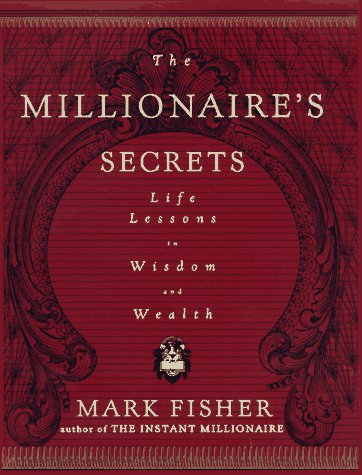 Very few books come along that are as inspiriting as THE MILLIONAIRE’S SECRET LIFE by Mark Fisher told in the form of a parable loaded with spiritual principles such as the law of abundance, gratitude, love, detachment, karma, and reincarnation.
The story is about a writer named John who worked in an advertising company and wanted to write a screenplay: “he’d felt a terrible sense of foreboding, that if he waited too long it would be too late. He’d lose the power to dream.” p. 15. John had a dream of himself as a magnificent blue jay—his favorite bird as a child—with its wings amputated.” P. 20. He realized that the bird represented himself so he decided to go to his uncle for advice and to ask for a loan to start his own advertising agency. His uncle referred him to an old eccentric millionaire who is really a master full of wisdom of not only how to succeed materially but how to grow as a spiritual being.
John asked the millionaire to help him make a fortune and the millionaire replied, “But tell me, how is it you haven’t already made your fortune?” p. 26-27. He was basically asking John if there was something blocking him from being successful and fulfilling his dreams. He pointed out that the real problem is fear. John didn’t have enough confidence in himself.
The millionaire told John the story of a lion that was raised by goats. The goat-raised lion saw a wild lion and was afraid of it, not knowing his own true nature. The old man said, “get rid of the goat so that the lion inside of you can awaken,” p. 77.
The millionaire gave John money to start his own company. When John went to leave for home the man touched his forehead between the eyes and said, “Discover who you really are Truth will set you free.” P. 30l. John used the spiritual principles the man taught him and tried to make a new life.
Over time he went through a series of experiences where thing went badly. At one point he was about to lose everything, including the woman he loved. The millionaire told him that “all sufferings are. . . sent to us out of mercy to help us evolve and find our true selves, find the real force with us, which ordinary happiness prevents us from seeing, because it lulls us to sleep – or rather, allows us to remain asleep…” p. 236-237.
John came to realize that his suffering had opened his heart and given birth to his talent. In the remainder of the story reveals whether he is able to use what he learned to create a good life.
The book is an inspiration for anyone with a goal or dream. It encourages us to become the lion, recognize our true self and create the life we want.
Have you found that suffering has helped you to evolve? I welcome your stories and comments.share this:

 For my birthday one of my sister’s sent me the book THE CAMINO. She thought I’d enjoy it as I am close in age to MacLaine when she took the Camino journey and my sister knew I was interested in spiritual topics.
Years ago I had read and enjoyed MacLaine’s OUT ON A LIMB and so I was interested to see what this adventure was about. MacLaine has been courageous and instrumental in getting spiritual ideas into the world. She’s appeared in movies and on TV sharing her experiences with out-of-body travel, her past lives, and ideas on extraterrestrial beings. THE CAMINO also explores these ideas and her own spiritual journey.
The Santiago de Compostela Camino is a famous pilgrimage across northern Spain that has  been taken by all kinds of people for thousands of years. The path lies directly under the Milky Way and reflects the energy of the stars above. MacLaine received two unsigned letters at two different times while in Brazil imploring her to do the Camino if she was serious about her esoteric writings. MacLaine asked her friend Anna Strong, a spiritual leader and counselor, if this was a journey she should make. Strong encouraged her to make the pilgrimage, which consisted of walking alone nearly 500 miles, carrying a seven-pound pack and sleeping most night in shelters.
Before starting the journey, MacLaine visited her friend Kathleen Tynan in London who was dying of cancer. MacLaine had a soul connection with this special friend and kept in touch with Tynan on her journey, sharing what she’d learned. MacLaine was sad her friend was dying, but also believed only the physical body dies. We start a new life in another world.
The story that follows was an intimate account of MacLaine’s pilgrimage. She met her friend Ann Strong in Spain. Strong started MacLaine on the pilgrimage by walking with her for a few days, then she was on her own. MacLaine took a tape recorder with her and recorded her thoughts and experiences as she went. Early on in her journey she dreamed about a past life as a gypsy during a lifetime when she lived along the Camino. Over the following days she learned more of this life during inner visits from a man named John the Scot. He told her that she was a gypsy during the time of Charlemagne. He was married and she was one of his mistresses.
 As MacLaine walked along she had hours to contemplate the meaning of life. She was raised Christian, but came to believe that she was fundamentally soul choosing to have a physical experience. She felt that many of our problems come from a disassociation with our soul. (p. 101-102)
MacLaine also shared her ideas on the law of cause and effect and John the Scot visited her inwardly to talk to her about the law of karma.
In the last third of the book John the Scot taught MacLaine about the Lemurian and Atlantean civilizations. MacLaine remembered a past life during the end of Lemuria. While I believe these civilizations existed, I found this part of the book pretty far out there and yet I was interested to read about her remembrances. I was also impressed with her honesty to share her experiences. No one can prove or disprove someone else’s realizations and inner reality.
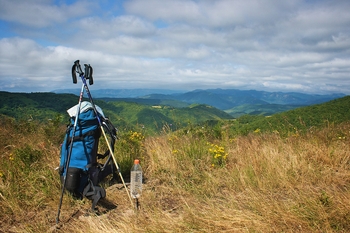 If you’re looking for a good book to read about a personal quest for spiritual understanding, I recommend this one. Maybe you’ll even be inspired to go on the Camino and trek across northern Spain.
Have you gone on a spiritual quest? Maybe an inner journey or an outer one. I’d love to hear about it, if you’d like to share it on this blog. Life is a gift and an rich, amazing adenture.
share this:

Follow Us


Star Rider Emerges

Visionary Fiction Alliance

Recent Comments